Some of the most important conversations of my life happened in a place that barely had room for two chairs.
It wasn’t a church.
It wasn’t a therapist’s office.
It wasn’t even really a porch.
It was a small apartment patio where we laughed, drank, argued, stayed up too late, and talked about things we probably weren’t saying anywhere else.
I didn’t know it then, but that little patio would eventually become the beginning of something called Porchlight for the Wounded.
Where It Started
When I first began spending time there, the patio held two beach chairs and not much else.
If I sat in the chair farthest from the door and needed to get inside, someone was moving.
But we sat there anyway.
Some nights I’d arrive after work around five, say I needed to leave around ten, and somehow it would be two in the morning.
Not every conversation was deep.
Not every conversation was good.
There were arguments. Misunderstandings. Moments I listened well and moments I didn’t.
It was real life.
And looking back, I think that mattered.
Porches had actually been part of my life before that patio.
After moving from California to Georgia, I found myself sitting outside often, usually with coffee. When my parents visited, my dad would sometimes join me.
He wasn’t much of a talker.
Neither of us needed to be.
We’d drink our coffee and sit.
Looking back, I think those quiet mornings taught me something I wouldn’t fully understand until much later:
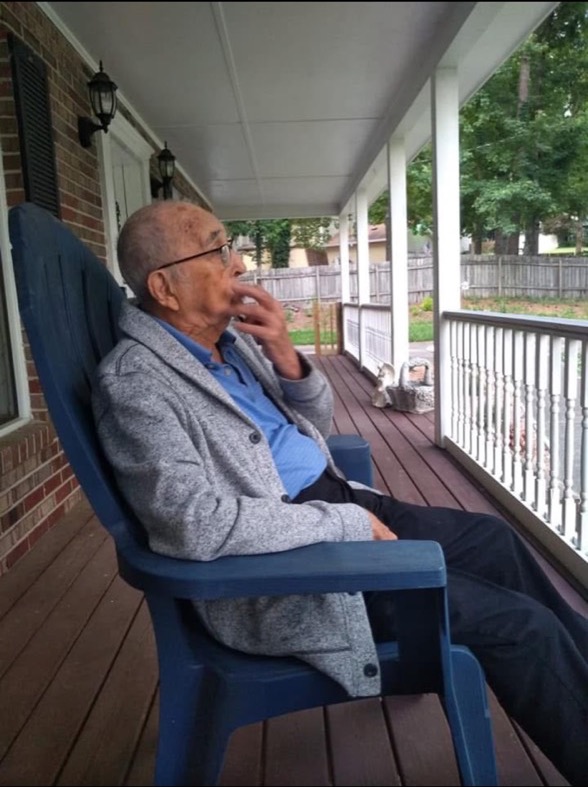
Sometimes presence matters before words do.
The Patio Changed
Years later, that little apartment patio began gathering stories of its own.
The boards creaked under our feet. You could feel them bow a little when you stepped outside.
A butterfly carried special meaning because a good friend I spent time with there had lost her mother.
And then there was the spider.
One day, a landscaping crew came through to trim back the bushes and branches growing into the patio. Later, I messaged my friend to let her know they were finished.
Her first question was:
“They didn’t touch the spider, did they?”
They hadn’t.
Apparently the spider lived there too.
And there was the Georgia wind moving through while we talked.
None of those things felt symbolic at the time.
They were simply part of life happening around us—imperfect people having imperfect conversations in the middle of imperfect lives.
“I Have an Idea.”
In the fall of 2025, I was trying to figure out what I wanted to do with TikTok.
At one point my username was Anthony Tonar, the Jedi Master, which tells you everything you need to know about my branding strategy.
I kept hearing the same advice:
Find your niche.
One day I was sitting on that patio trying to figure out mine.
I looked around.
I noticed the patio lights.
And something clicked.
I remember saying:
“Oh, I have an idea. I gotta leave.”
I went home.
The idea became:
Porchlight for the Wounded.
I didn’t have a book.
I didn’t have a website.
I wasn’t using AI.
I didn’t have a five-year plan.
I had a name and an idea I was still trying to understand.
The name came before the clarity.
Before there was a book, Porchlight was already becoming a place to talk about the battles people carry that nobody else sees—the things behind closed doors, the struggles carried quietly, the parts of life we don’t always know how to talk about.
Then I Thought I’d Make a Journal
This is probably where I’m supposed to tell you I felt called to write a book.
That’s not exactly what happened.
I was walking one day trying to think of ways to make some extra money.
I’d been talking with ChatGPT about different possibilities, and journals came up. I’d also seen those ads that make creating one sound incredibly easy.
Create it.
Put it online.
Charge some money.
Done.
I thought, Okay. I could do that.
I’d always had the thought somewhere in the back of my mind that maybe someday I’d write a book. And I’d lived through enough over the previous few years to have something to write about:
Health problems.
An arrest.
Divorce.
Relationships.
Loss.
Starting over.
So I figured I’d make a journal out of some of it.
Something simple.
It didn’t stay simple.
I Wanted to Sit Beside Them
Week One began with masks—the versions of ourselves we sometimes wear around other people.
But somewhere around Week Two, everything shifted.
I realized I didn’t want to create thirty lessons telling people what to think.
I didn’t want to fix anybody.
I didn’t want to stand in front of the reader and explain everything I had supposedly figured out.
I wanted to sit beside them.
And suddenly, I was back on the porch.
The book needed to feel like two people sitting together having a conversation.
One story.
One honest discovery.
One question at a time.
I stopped thinking about finishing something quickly.
I started thinking about the person who might someday be sitting on the other side of the page.
Who I Am
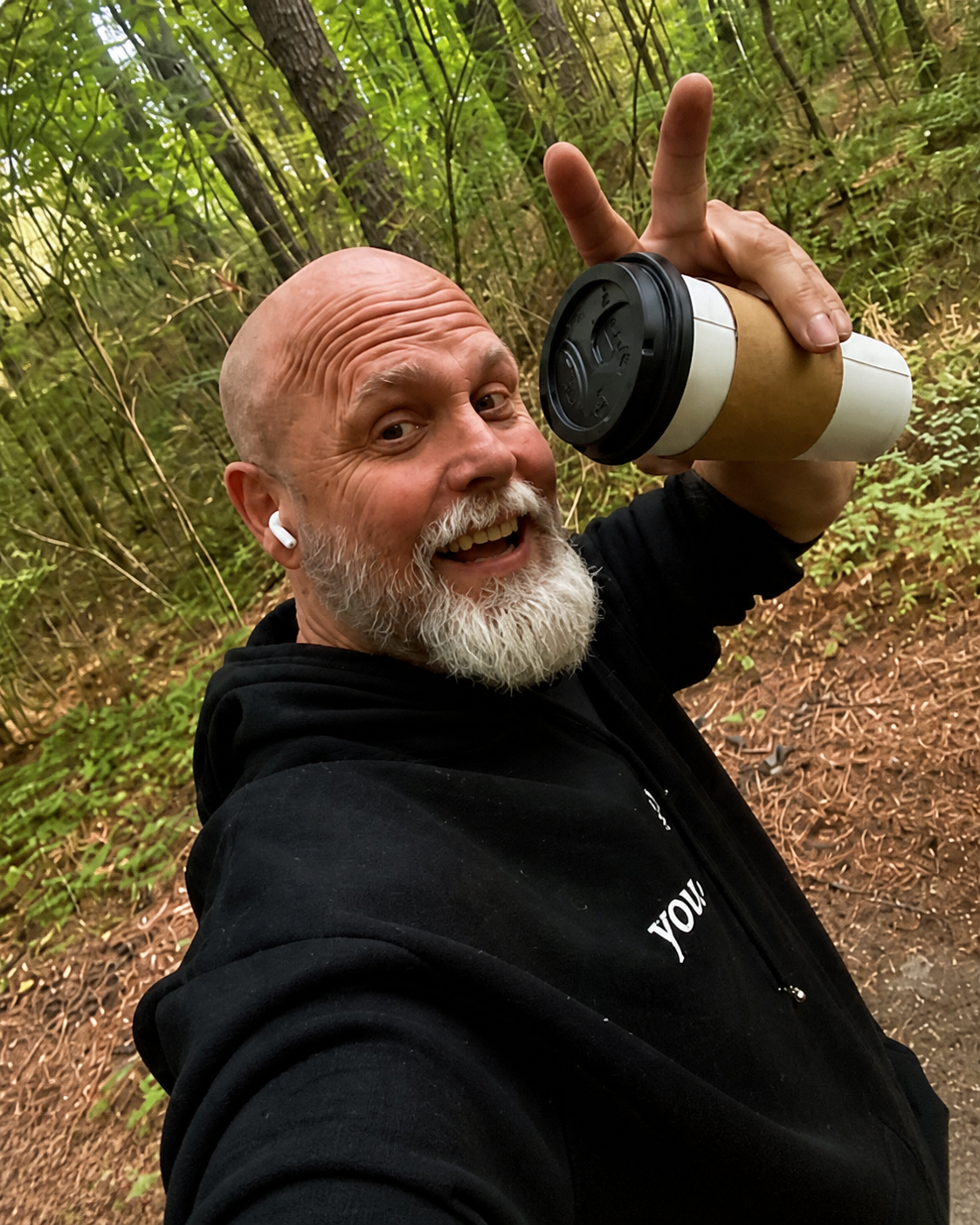
I’m Anthony.
I’m a father. A grandfather. A writer—which still feels a little strange to say—and a person of faith who is still figuring out what that looks like in real life.
I’m not somebody who has life figured out.
I still get angry.
I still make mistakes.
There are places where what I believe and how I live don’t line up neatly.
There are seasons when my faith feels steady and seasons when I wrestle with it.
I’m still becoming.
I’m telling you that because I don’t want to create a porch where everybody except the person whose name is on the book has to pretend.
Porchlight isn’t a place to preach, and it isn’t a place where everybody has to agree.
We can believe differently, see life differently, ask different questions, and still pull up a chair.
If you want to talk about God, I’ll talk about God.
If you don’t, we can talk about something else.
Either way, you’re welcome here.
The Porch Light Is Not a Place
It took me a while to understand that.
The original patio mattered.
My own porch matters.
The walks I take matter.
They’re part of my story. They’re places where conversations happened, where I slowed down, listened, thought, and sometimes simply sat with someone.
But over time I realized that Porchlight wasn’t limited to any one of those places.
Your porch might look completely different from mine.
It might be a kitchen table.
A walking trail.
A coffee shop.
A parked car.
Or simply another person who gives you enough room to finally say what’s really going on.
Eventually I found the words for what I had been trying to understand:
The Porch Light is not a place. It is a posture.
It’s making room.
Listening before trying to fix.
Allowing honesty without immediate judgment.
Sitting beside someone who is still figuring things out.
Because all of us are.
That’s what I want Porchlight to be.
Not just a book, website, or social media account.
A digital front porch made of stories, conversations, reflections, resources, and whatever else grows from it.
A place where people fighting battles nobody sees might feel a little less alone.
I’m never going to promise you everything works out perfectly.
We’ll grow.
We’ll stumble.
We’ll wrestle with the same things more than once.
Especially me.
So if you found your way here carrying something heavy—questioning something, grieving something, struggling with God, struggling with yourself, fighting a battle nobody can see, or simply tired of pretending you’re okay—you don’t need the right words.
You don’t have to clean yourself up first.
You don’t have to believe exactly what I believe.
You certainly don’t have to be perfect.
There’s still an empty chair.
Come as you are.
The light is still on. ☕💡